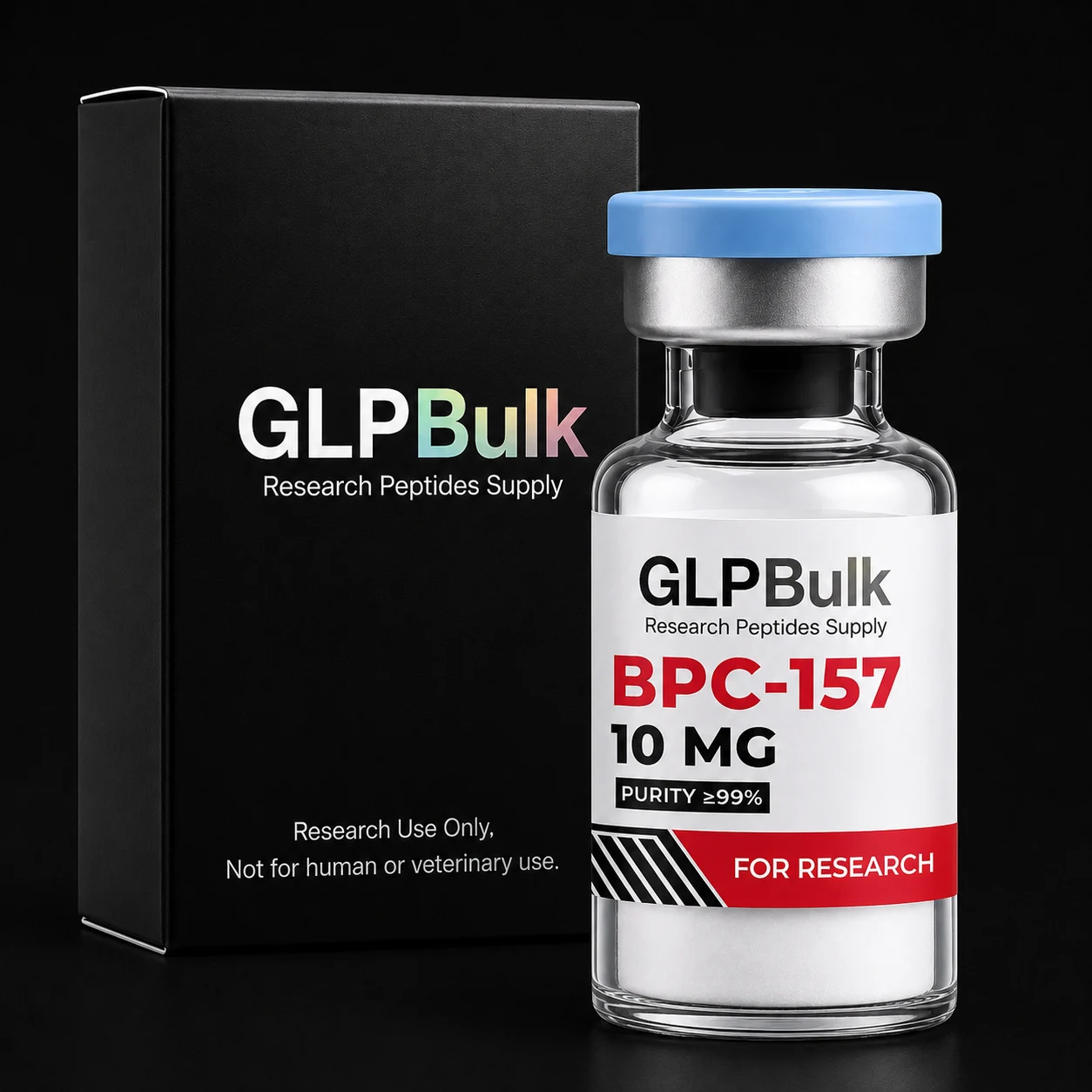
BPC-157 (Pentadecapeptide) is a synthetic research peptide investigated for its interaction with angiogenesis, VEGF expression, and nitric oxide (NO) signaling pathways in cellular models.GLPBulk supplies BPC-157 as a lyophilized solid verified for ≥99% purity
$70.00
| Quantity | 10 MG |
|---|
Independent Laboratory Verification
GLPBulk supplies BPC-157 as standard lyophilized formulation research vials for qualified laboratories. Each lot meets the same analytical specification (≥99% purity, third-party HPLC/MS). A current COA is posted on this product page.
BPC-157 is a synthetic **pentadecapeptide** (comprising 15 amino acids) derived from a protective protein found in gastric fluid. It is widely investigated in research settings for its influence on cellular signaling pathways involving:
Supplied for in-vitro/ex-vivo research by qualified laboratories; not for administration to humans or animals.
Published preclinical literature describes BPC-157’s interaction with soft tissue models, specifically regarding tendon fibroblasts, gastric epithelial cells, and vascular endothelium. Researchers should review primary sources for specific in-vitro protocols and cellular response data.
| Feature | BPC-157 | TB-500 (Thymosin Beta-4) | GHK-Cu |
|---|---|---|---|
| Structure | Pentadecapeptide (15 AA) | 43 Amino Acid Fragment | Tripeptide + Copper |
| Primary Target | VEGF / NO pathways | Actin sequestration | Collagen synthesis |
| Research Focus | Angiogenesis & Gastric signaling | Cell motility & migration | Dermal remodeling |
All products are supplied for laboratory research use only. Not for human or veterinary administration. End users must comply with institutional requirements and all applicable laws. Purchase constitutes acceptance of these terms.
BPC-157 is a synthetic pentadecapeptide, meaning it’s built from a 15-amino-acid sequence, originally derived from a protective compound found in gastric fluid. It’s one of the more frequently studied peptides in tissue-repair research, largely because of its observed interaction with VEGF expression and nitric oxide signaling in cellular models.
GLP Bulk supplies it as a lyophilized vial at 10mg, verified through third-party HPLC and mass spectrometry to confirm purity before it ships. Each batch comes with a certificate of analysis, so researchers can check molecular identity and purity data ahead of time rather than taking it on faith.
Compared to other peptides in the same research category, BPC-157 tends to get chosen specifically for angiogenesis and fibroblast activity studies, whereas something like TB-500 is more often selected for cell migration work, and GHK-Cu for collagen-related research. Labs running comparative panels across these three sometimes order all three together to keep testing conditions consistent.
Storage is fairly standard for this class of peptide. Keep the unreconstituted vial dry and out of light, and once it’s mixed with bacteriostatic water, hold it between 2-8°C and avoid repeated freeze-thaw cycles, since that tends to degrade peptide integrity faster than anything else in handling.
This product is intended strictly for in-vitro and ex vivo research, not for human or animal use.
By accessing this website, you confirm that you are at least 21 years of age and acknowledge terms of service.