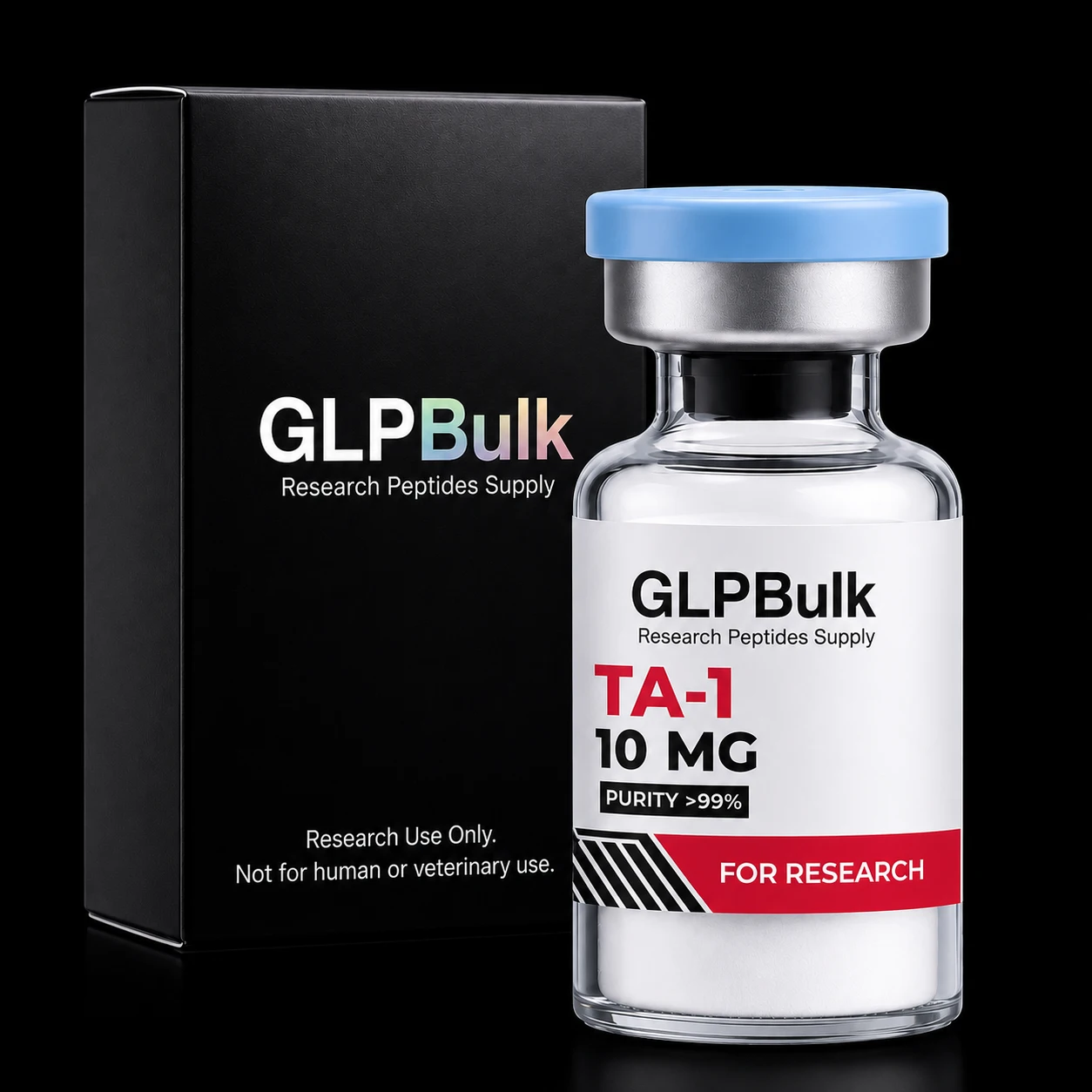
Thymosin alpha-1 (TA-1) is a highly conserved synthetic peptide consisting of 28 amino acids. Originally isolated from the thymus gland tissue, it is investigated for its potent immunomodulatory properties.
$140.00
| Quantity | 10 MG |
|---|
Out of stock
Independent Laboratory Verification
Thymosin alpha-1 (TA-1) is a synthetic polypeptide with the molecular formula C₁₂₉H₂₁₅N₃₃O₅₅. It corresponds to a highly conserved 28-amino acid sequence that is naturally cleaved from prothymosin alpha, a precursor protein found in various mammalian tissues, predominantly the thymus. In experimental environments, the synthetic peptide is utilized to replicate the endogenous signaling mechanisms responsible for the development and maintenance of cellular immunity.
Scientific studies focus on the interaction between TA-1 and the Toll-like receptors (TLRs) located on dendritic cells and other antigen-presenting cells. By engaging these receptors, TA-1 is observed to trigger intracellular signaling cascades that lead to the increased production of critical immune-modulating cytokines, including Interleukin-2 (IL-2) and Interferon-gamma (IFN-γ). This pathway is essential for studying the activation and proliferation of CD4+ and CD8+ T-cells in vitro.
In animal models, TA-1 is frequently investigated within the context of immune senescence and severe immunodeficiency. Researchers utilize this peptide to evaluate the restoration of immune homeostasis, specifically monitoring its effects on viral replication rates and cellular defense mechanisms against opportunistic pathogens. Furthermore, its pleiotropic effects are studied regarding its potential to upregulate major histocompatibility complex (MHC) class I expression, providing a valuable tool for understanding complex host-defense networks.
This product is strictly for laboratory and research purposes only. Thymosin alpha-1 (TA-1) is not intended for human use, diagnostic, or therapeutic procedures. It serves as a reagent for scientific study and method development.
References
Goldstein, A. L., & Badamchian, M. (2004). “Thymosins: chemistry and biological properties in health and disease.” Expert Opinion on Biological Therapy, 4(4), 559-573.
Romani, L., et al. (2004). “Thymosin alpha 1 activates dendritic cells for antifungal Th1 resistance through toll-like receptor signaling.” Blood, 103(11), 4232-4239.
Naylor, P. H., et al. (2010). “Thymosin alpha 1: A pleiotropic biological response modifier.” Annals of the New York Academy of Sciences, 1194(1), 162-167.
By accessing this website, you confirm that you are at least 21 years of age and acknowledge terms of service.