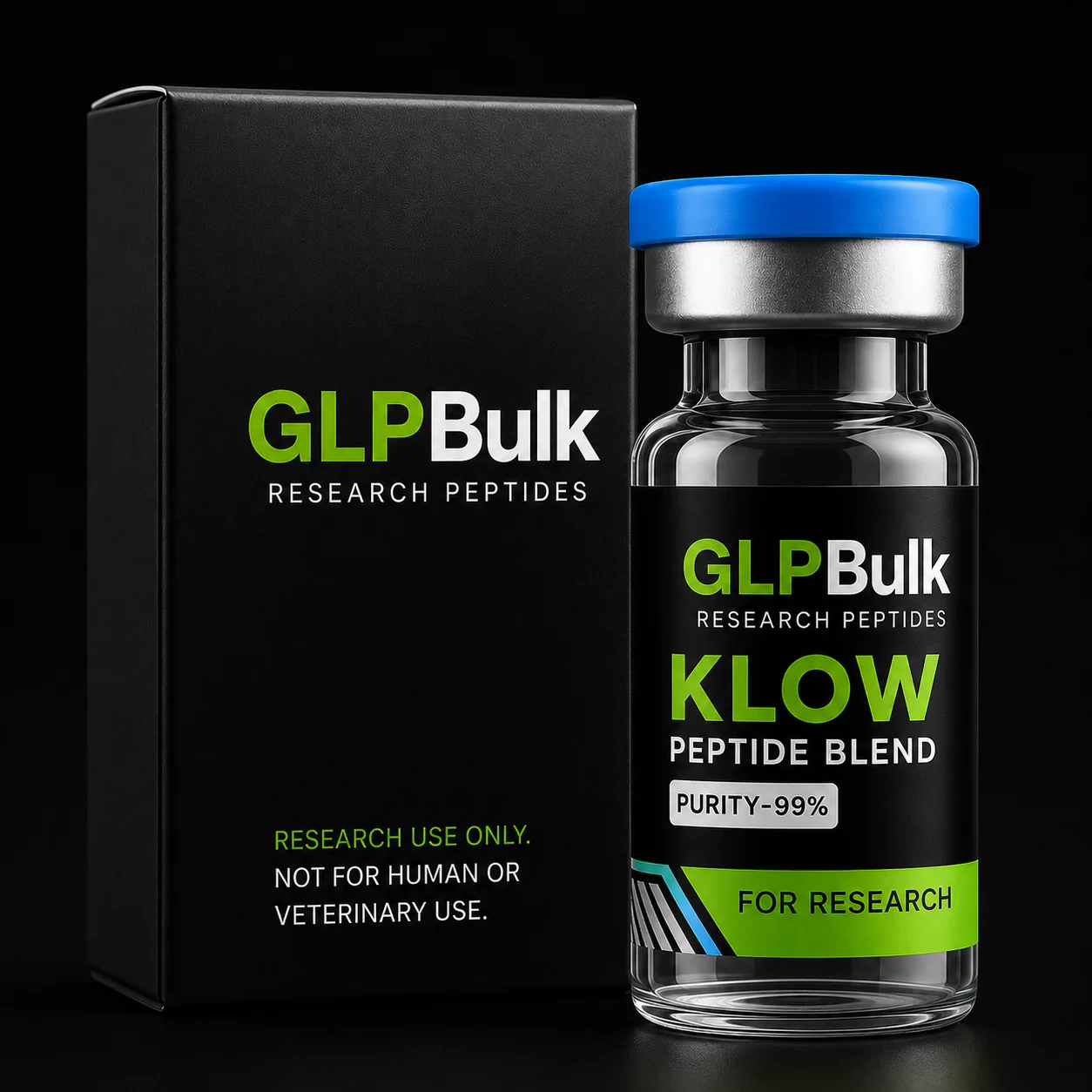
KLOW Peptide is a multi-component research formulation developed for laboratories investigating complex peptide signaling interactions within controlled experimental models.
$119.00
| Quantity | 20 MG |
|---|
Independent Laboratory Verification
KLOW Peptide is a multi-component research formulation developed for laboratories investigating complex peptide signaling interactions within controlled experimental models. Unlike single-analyte compounds, KLOW combines four well-studied research peptides into a unified lyophilized format, enabling comparative and combinatorial pathway analysis within a single experimental system.
This formulation is intended strictly for in-vitro and preclinical research use and is supplied for qualified laboratories conducting non-human, non-clinical investigations.
Many biological processes studied in peptide research—such as cellular signaling, inflammatory cascades, angiogenic pathways, and extracellular matrix interactions—do not occur in isolation. KLOW Peptide is designed to support multi-variable research models, allowing researchers to evaluate:
By consolidating multiple peptides into one standardized formulation, KLOW simplifies experimental design while maintaining analytical transparency through third-party testing.
Each KLOW Peptide vial contains the following research compounds:
1. BPC-157
A synthetic peptide fragment commonly investigated in laboratory studies involving cellular repair signaling, angiogenic models, and tissue response pathways.
2. KPV
A tripeptide fragment derived from α-MSH, frequently used in research exploring inflammatory signaling modulation and cellular communication mechanisms.
KLOW Peptide undergoes independent third-party analytical testing to verify key chemical attributes prior to release, including:
Certificates of Analysis (COAs) are published in full to ensure traceability and transparency for laboratory use.
Handling & Storage (Laboratory Use)
This KLOW research peptide is a four-part blend built for labs studying how multiple peptide pathways interact rather than isolating just one. Instead of testing BPC-157, KPV, TB-500, and GHK-Cu separately, KLOW combines them into a single lyophilized vial, which cuts down on the number of individual formulations a lab has to manage during multi-variable studies.
That combination makes sense for research looking at overlapping signaling activity, like tissue response pathways alongside inflammatory modulation or extracellular matrix interaction, where isolating a single compound doesn’t reflect how these systems actually behave together.
Each vial ships with a certificate of analysis covering identity confirmation, net peptide content, and endotoxin screening, so labs can verify what they’re receiving before it goes into a study. Storage is straightforward: keep it cold and light-protected before reconstitution, then hold reconstituted material at 2-8°C and avoid repeated freeze-thaw cycles.
Labs already running BPC-157 or TB-500 individually sometimes bring in KLOW specifically to see whether combined administration produces different results than single-peptide controls, which is often the point of including it in a comparative research design in the first place.
By accessing this website, you confirm that you are at least 21 years of age and acknowledge terms of service.